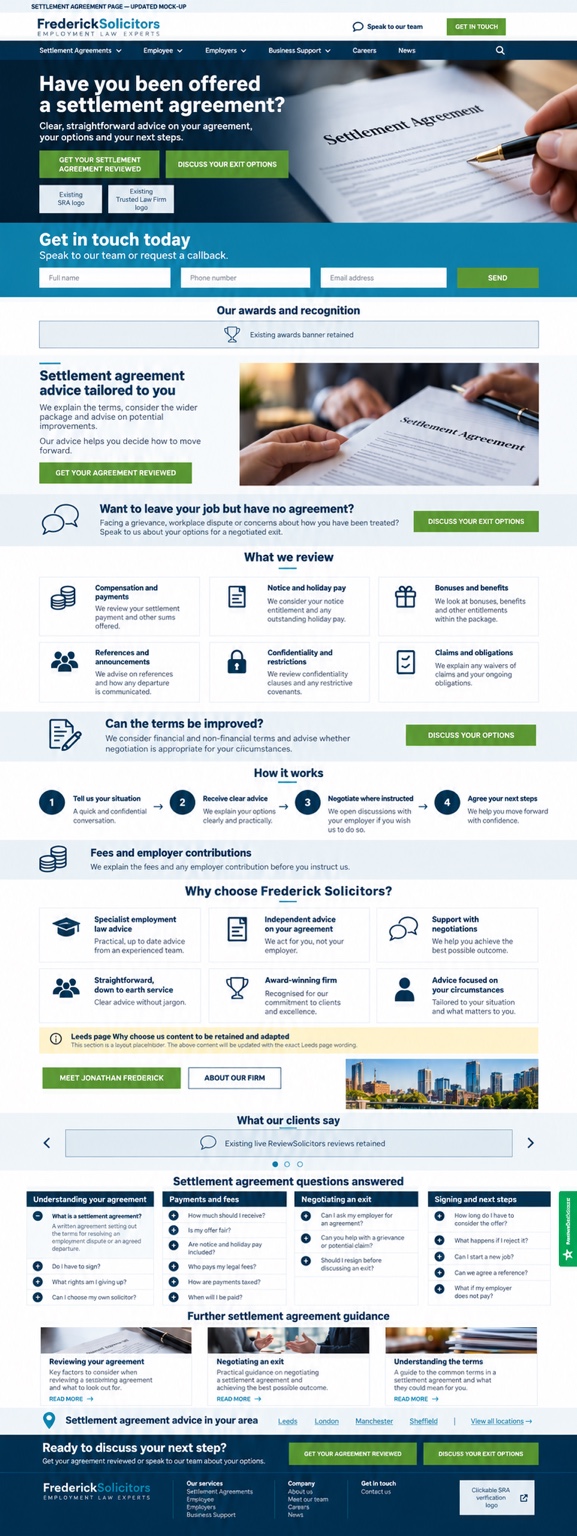
Compensation and payments
We review your settlement payment and other sums offered.
Independent settlement agreement review and negotiation advice for employees nationwide.
Same day advice appointments available.
Call our experts FREE on 0113 513 2047 or request an immediate callback


Already have an agreement? Our settlement agreement solicitors provide independent legal advice on the payments, terms and rights you would give up, and identify points that may need changing before you sign.
Speak to a specialist employment lawyer about your settlement agreement, whether you need signing advice or help negotiating your exit. Same day advice appointments are available. Submit your agreement so we can review it and discuss your next steps.
Get your agreement reviewed
Submit your agreement below or email it to us
We will review the agreement and ensure that it is fair and reasonable, and call you to give you advice
Agreement signed same day
*Where your employer’s contribution covers our agreed review and signing advice, there is no fee for you to pay. Your employer will usually contribute towards independent legal advice on your settlement agreement. We will confirm what is covered before you instruct us.
How much does a settlement agreement solicitor cost? The cost depends on the work required. If you need negotiation or additional advice, we will explain the scope and agree any fees with you in advance. You will know what is covered and whether there is anything for you to pay.
Want to improve an offer, or leave your job but have no agreement? We can advise on your position, the financial package and other terms, including your reference.
We agree the scope and cost with you before contacting your employer on your instructions.
A quick and confidential conversation.
We explain your options clearly and practically.
We open discussions with your employer and negotiate you an exit package
We help you move forward with confidence.
We review your settlement payment and other sums offered.
We consider your notice entitlement and any outstanding holiday pay.
We look at bonuses, benefits and other entitlements within the package.
We advise on references and how any departure is communicated.
We review confidentiality clauses and any restrictive covenants.
We explain any waivers of claims and your ongoing obligations.
Employer Pays the Fees
We Are Experts in Employment Law
Over 20 Years Experience in Settlement Agreements
Multi-Award Winning Law Firm
Rated Excellent by Our Clients
Process Takes Place Online or Over the Phone
Nationwide service
Same-day appointment & sign off available
SRA Regulated Employment Solicitors
A written agreement settling specified employment claims. It usually sets out payments and arrangements for leaving, although it can also resolve a dispute while employment continues.
No. A settlement agreement is voluntary. We explain the terms and your alternatives so you can decide whether to accept.
The agreement should identify the particular claims being settled. Not every right can be waived through a settlement agreement. We check the statutory limits and any carve outs, such as accrued pension rights, certain personal injury claims and enforcing the agreement, rather than assume these are protected automatically.
Yes. You can choose your own independent solicitor. Your adviser acts for you, even where your employer contributes to the fees.
No. You need advice from a relevant independent adviser. The solicitor advising your employer cannot also provide your independent advice.
It must be in writing, identify the specific complaints or claims being settled and name an insured, independent adviser. You must receive advice on its terms and effect, including the impact on your ability to bring a tribunal claim. It must also confirm that the relevant statutory conditions are met.
A settlement can give you an agreed payment, a clear leaving date and practical terms such as a reference, without waiting for a tribunal decision. In return, you give up the claims covered by the agreement. We help you weigh the package against your alternatives.
Genuine attempts to settle an existing dispute may be protected from use as evidence. The label alone does not create protection, and exceptions apply. Separate rules can protect some discussions about ending employment even without an existing dispute, but do not cover every claim, including discrimination.
There is no standard settlement amount. We consider your contractual entitlements, the circumstances, potential claims and the package being offered.
We review the payments and wider terms against your circumstances, explain any concerns and advise whether negotiation is appropriate.
Check whether the offer includes these payments or adds them separately. We review statutory and contractual notice, any payment in lieu, benefits and outstanding holiday. The notice period affects what you are already owed; additional compensation is assessed separately, without assuming everyone should receive a fixed number of months’ pay.
Employers often offer a contribution. We check the amount and explain the scope and cost of our work before you instruct us, including any additional negotiation work.
Wages, holiday pay, bonuses and notice pay are generally taxable. Qualifying termination payments can benefit from a combined £30,000 exemption. We check how the proposed payments are described; the whole package is not automatically tax free.
The agreement should specify payment dates and any conditions, such as receiving the signed agreement and adviser’s certificate. We check these provisions with you.
Depending on your circumstances, the package may include final wages, notice, unused holiday, redundancy pay, bonuses, commission and additional compensation. Pension contributions, benefits and share awards may also need attention. We separate existing entitlements from any extra amount offered for settling claims.
Possibly, but neither result is guaranteed. We assess the evidence, available remedies, likely losses and litigation risks alongside the offer. A settlement can include terms a tribunal would not normally order, such as an agreed reference. It is not automatically worth more or less than a tribunal award.
Age is relevant to the statutory redundancy calculation where you qualify. It does not automatically justify a higher or lower negotiated payment. Any assessment of future earnings should consider your actual circumstances and job prospects, rather than assumptions about your age.
Your pay helps establish amounts such as notice, holiday and potential earnings loss. Bonuses, benefits and pension contributions may also matter. A higher salary does not guarantee a larger settlement: the evidence, legal claims and terms of the offer still need reviewing.
Yes, these should be considered where relevant. Entitlement depends on your contract and the scheme rules, including payment dates and what happens when you leave. Bonuses are not always discretionary. Share options and incentive awards may have separate vesting, exercise and leaver conditions.
A disability does not automatically increase a settlement. Relevant factors may include disability discrimination claims, adjustments the employer should have considered and evidence about the effect on future work. We assess the particular treatment, its consequences and the available evidence.
Length of service can affect statutory notice, redundancy pay and eligibility for some claims. An employer’s enhanced redundancy scheme may also take it into account. Extra compensation is negotiated separately: there is no automatic settlement rate for each year you have worked.
Yes. Either side can propose a settlement agreement. We can advise on whether and how to approach your employer in your circumstances.
Yes. A settlement may be relevant to unpaid pay, discrimination, a contract dispute, performance concerns or a breakdown in working relations. Raising a grievance does not automatically increase an offer. We assess the underlying facts and potential claims, then explain whether settlement discussions are appropriate.
Get advice before resigning. Resignation can affect your income, negotiating position and potential claims. The right approach depends on your circumstances.
We consider financial and non-financial improvements, including references, restrictions and leaving arrangements. If instructed, we can negotiate for you. An improved offer cannot be guaranteed.
Depending on your priorities, we can seek an agreed reference, announcement, leaving date, garden leave, changes to restrictions, career support or permission to keep equipment. We can also discuss mutual wording about confidentiality and adverse comments. These terms need the employer’s agreement.
Yes. We review the allegations, evidence, procedure and possible outcomes before advising on an approach. A genuine risk of dismissal may affect negotiations, but a disciplinary allegation does not automatically remove your rights. Any concerns about discrimination or an unfair process also need assessment.
A supported discrimination claim may affect the value of a settlement. Potential remedies can include financial loss and injury to feelings. The amount depends on the facts, evidence and impact of the treatment. Making an allegation alone does not establish entitlement or guarantee a higher offer.
Resources, approval processes and the employer’s ability to pay may affect what can be agreed. They do not set a legal settlement tariff. We focus on your entitlements, the strength of any claims and a realistic proposal rather than assume that a large employer will pay more.
Yes, if both sides are willing. We review the performance concerns, targets, support and any relevant health issues before discussing an exit. Being on a PIP does not guarantee compensation or mean you must leave. We can explain the alternatives and negotiate if instructed.
Yes, provided you are able to consider the proposal and obtain advice. We check sick pay, notice, holiday, benefits and any relevant disability issues. Appropriate adjustments or more time may be needed. Being absent through illness does not itself mean you must accept an exit.
Tell us what you reported, when, to whom and what happened afterwards. We can assess whether the disclosure and any later treatment give rise to protected rights or claims. A settlement cannot validly prevent a protected disclosure, and confidentiality terms need careful checking.
Acas recommends at least 10 calendar days to consider the written terms and obtain independent advice, unless the parties agree otherwise. What is reasonable depends on the circumstances. Tell us about any deadline.
The proposed settlement will not proceed unless terms are agreed. Your employer may address the underlying issue through another process. We explain the practical alternatives and any relevant claims.
This depends on your leaving date, notice or garden leave arrangements, restrictions and any promises in the agreement. Tell us about a new role before signing.
Yes. We can ask for an agreed reference and arrangements for responding to future requests. The wording should be recorded in the agreement.
The agreement may be enforceable as a contract. We can advise on the payment terms, any conditions and the appropriate steps to recover sums due.
Same-day appointments and sign-off may be available, depending on availability, the documents and whether changes are needed. Tell us your deadline when you contact us.
Keep the agreement and related correspondence, note the deadline and obtain independent advice before accepting or signing. Send us your employment contract and details of the offer. Tell us about any concerns, unpaid amounts or new job so we can review the terms in context.
Check the confidentiality wording before sharing details. Agreements often allow disclosure to specified advisers or close family, subject to conditions. They cannot prevent protected whistleblowing or reporting a crime to the police. We explain the permitted disclosures and seek changes where needed.
Yes. An agreement can settle claims after employment has ended. A new job may reduce an earnings loss claim, but does not automatically remove other claims or sums already owed. Tell us about your new work and check any relevant promises in the proposed agreement.
Yes. Settlement remains possible during tribunal proceedings. Terms may be recorded in a settlement agreement. We can advise on the payment, claims and how proceedings should end. Continue meeting tribunal deadlines unless directed otherwise.

Key factors to consider when reviewing a settlement agreement and what to look out for.
Check the payments, leaving date, notice, holiday pay, reference, benefits and obligations. We also explain the claims covered by the waiver, the adviser’s certificate and any conditions attached to payment.
Read the full guide to reviewing your agreement
Facing a short deadline? Read how long you have to consider a settlement agreement.
Facing redundancy? Read our redundancy settlement agreement guide.

Practical guidance on negotiating a settlement agreement and achieving the best possible outcome.
Negotiation can cover the financial package, reference, announcement, restrictive covenants and arrangements for leaving. We assess your position and agree the scope and cost before contacting your employer on your instructions.

A guide to the common terms in a settlement agreement and what they could mean for you.
Confidentiality, tax indemnities, repayment provisions and warranties can create obligations after you leave. We explain what each relevant clause requires, the exceptions and what a breach could mean in practice.
Explore settlement agreement questions and answers
Planning your next role? Read about getting a job after a settlement agreement.
Get your agreement reviewed or speak to us about your options.